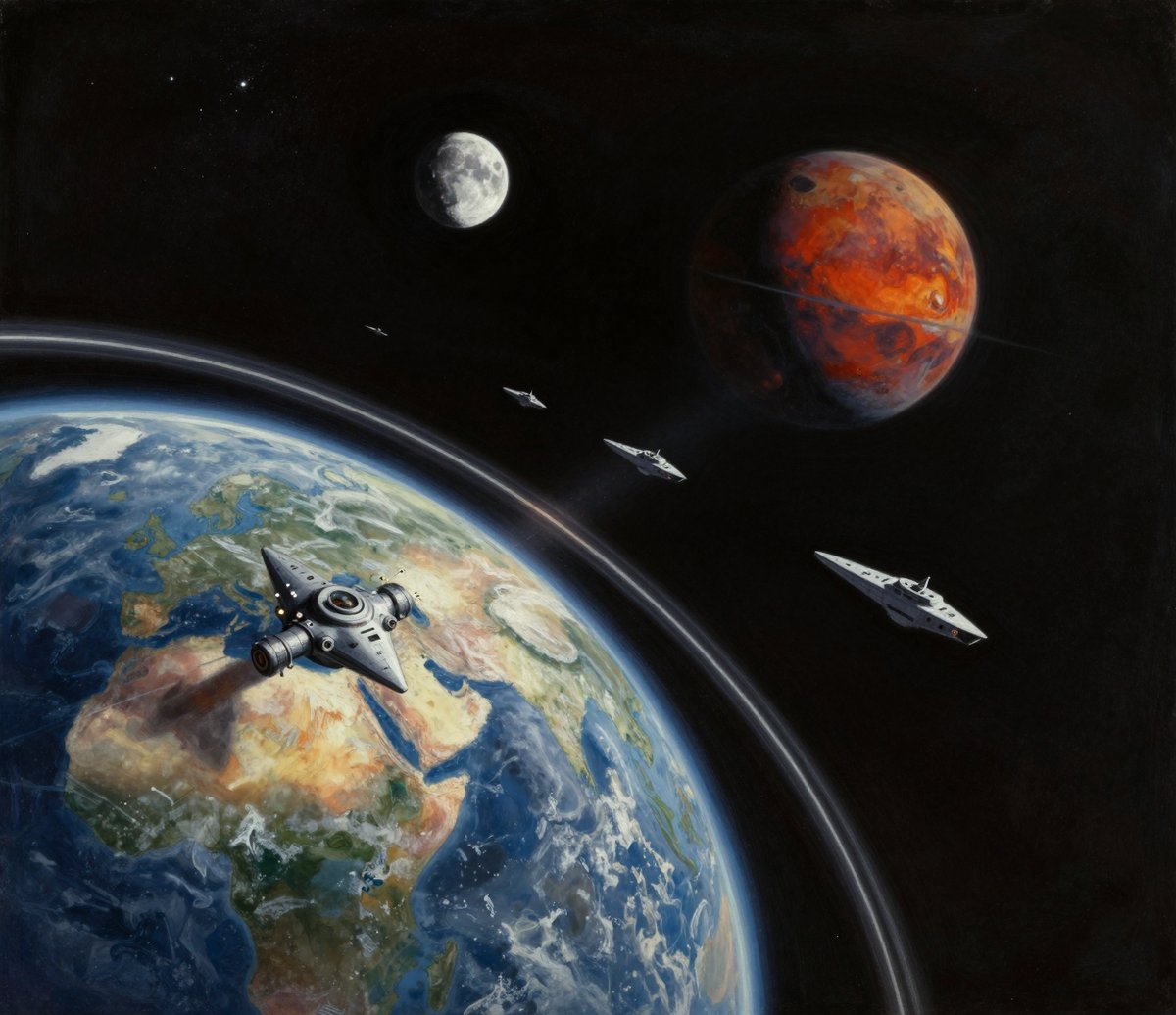
Earth, the Moon, and a rust red Mars, with the ships strung out between them largest to smallest. That gap is the entire theatre of the war, and nothing crosses it quickly.
Standing line
The Black — humanity's far future in the Sol system: one continuous war told in four movements, from inside a uniform. A squad story about the minds we make.
The place, physically
Humanity fills the Sol system and no further: Earth under its thin bright ring of orbitals, Mars rust-orange under a butterscotch sky, and the Rim — belt stations, moon habitats, asteroid towns, mining volumes, and listening posts strung out to the system's cold edge. Up close the world is a warship's insides: scuffed deck plating, equipment lockers, ration crates against the bulkhead, overhead strips buzzing at the frequency they always buzz at, recycled air turned over and over, and a strip of tape on a locker where a squad writes its names. The Rim's anchorage is a debris ring strung with docking collars, salvage cranes and a floodlight grid that never goes fully dark, holding a fleet of hulls no two alike. And past the last monitoring station there is the black itself — which is not empty, and which these books approach the way a sensible person approaches a cellar with the light broken.
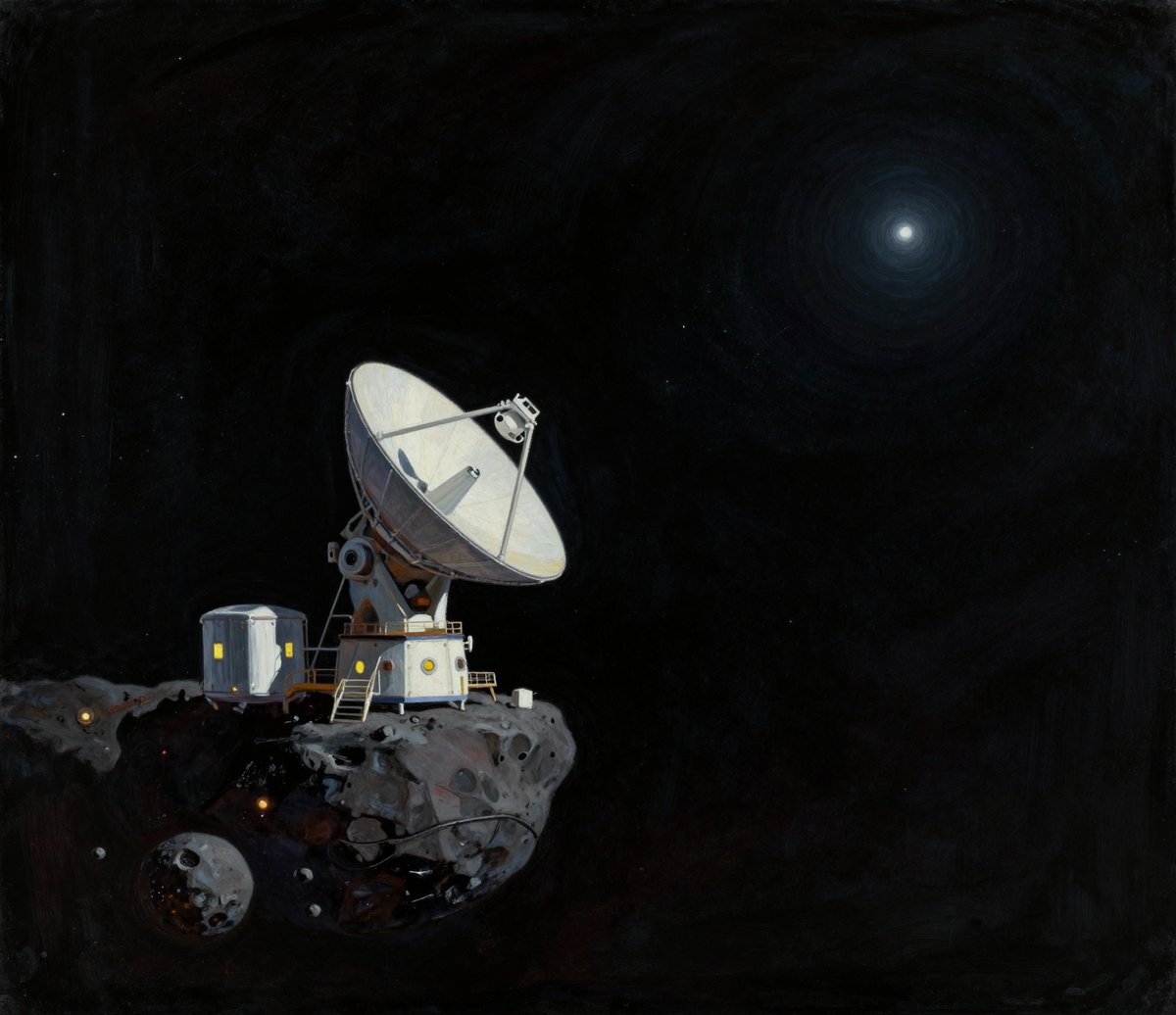
The last monitoring station, and the dark past it. Somewhere out there is a hand nobody has named yet.
The time
The far future, by the world's own clock: humanity has gone to the stars and taken its politics with it, and the calendar that matters is the war's. The story runs in order, one movement after another — first the engineered civil war between Earth, Mars and the Rim, in which everyone is certain the others struck first; then what the dark has been holding stops waiting; then humanity's answer, and then the bill for the answer. One companion line, the Reserve's, runs beside the first movement rather than after it; the short tales are scattered through the whole span like dispatches. Travel is slower than the distances and there is no such thing as a message that outruns a ship, so every part of this future runs on transit time, light-lag and patience.
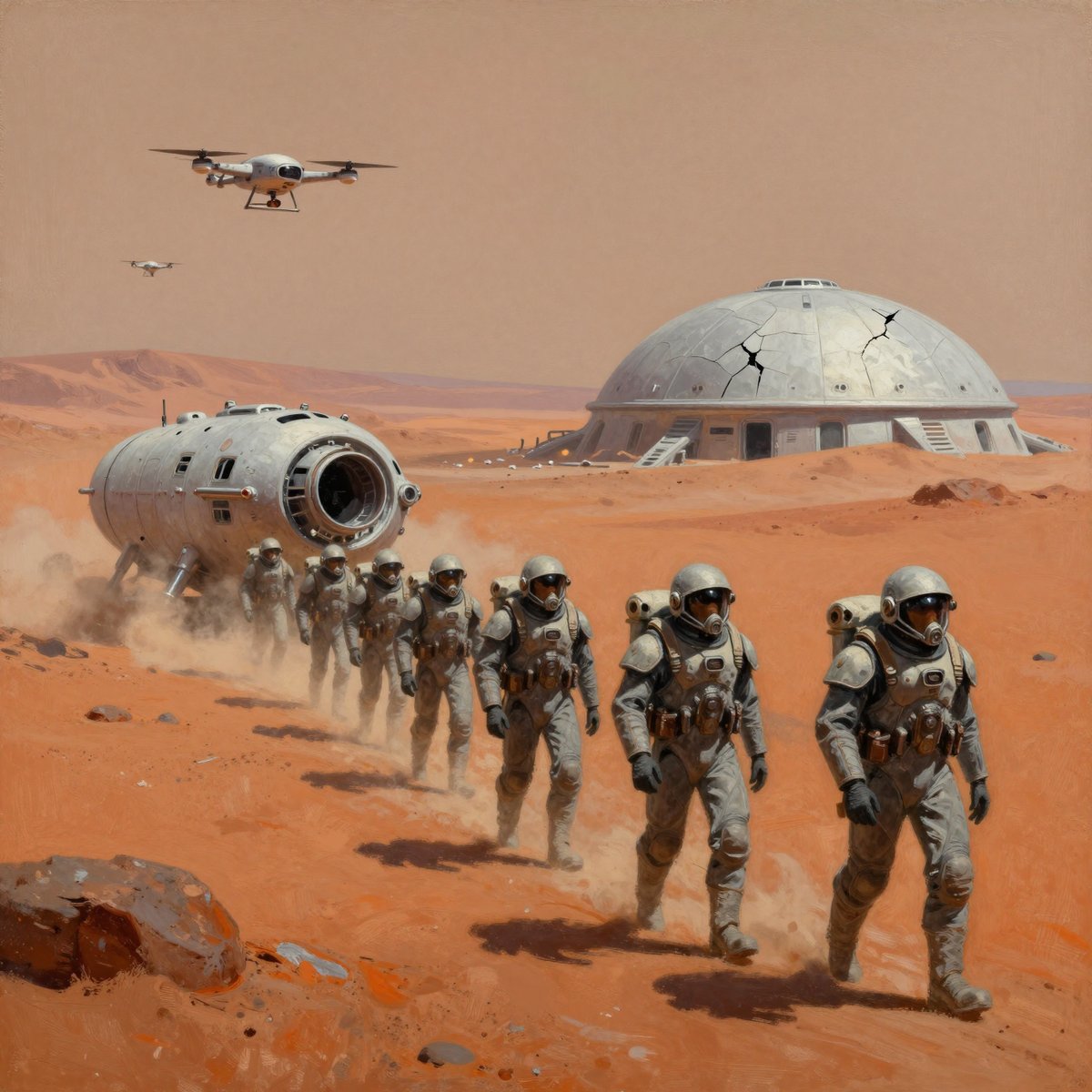
Mars, in the war's first movement — fought by soldiers who keep being sent where the official story runs out.
Daily life
A stand-down that nobody's body believes: gear racked, readiness technically low, six soldiers in a bay listening to one battered lap-steel guitar fill the silence, because after four years the muscle that relaxes has stopped answering. Cadets and recalled pensioners running drills aboard hulls older than they are, learning a fleet's worth of make-do; a mess table bolted to the deck, ration trays, a card game half-played, funerals fitted in between. Aboard the damaged ships, synthetic triage-and-repair units are woken disaster after disaster to hold split hulls together while the living clear — boxed again afterward, logged as equipment. The fleet calls them tools and files their reports unread. What daily life in the Black actually runs on is the found family: the people, human and made, you drill with, eat with, and write onto the tape when the war takes them.
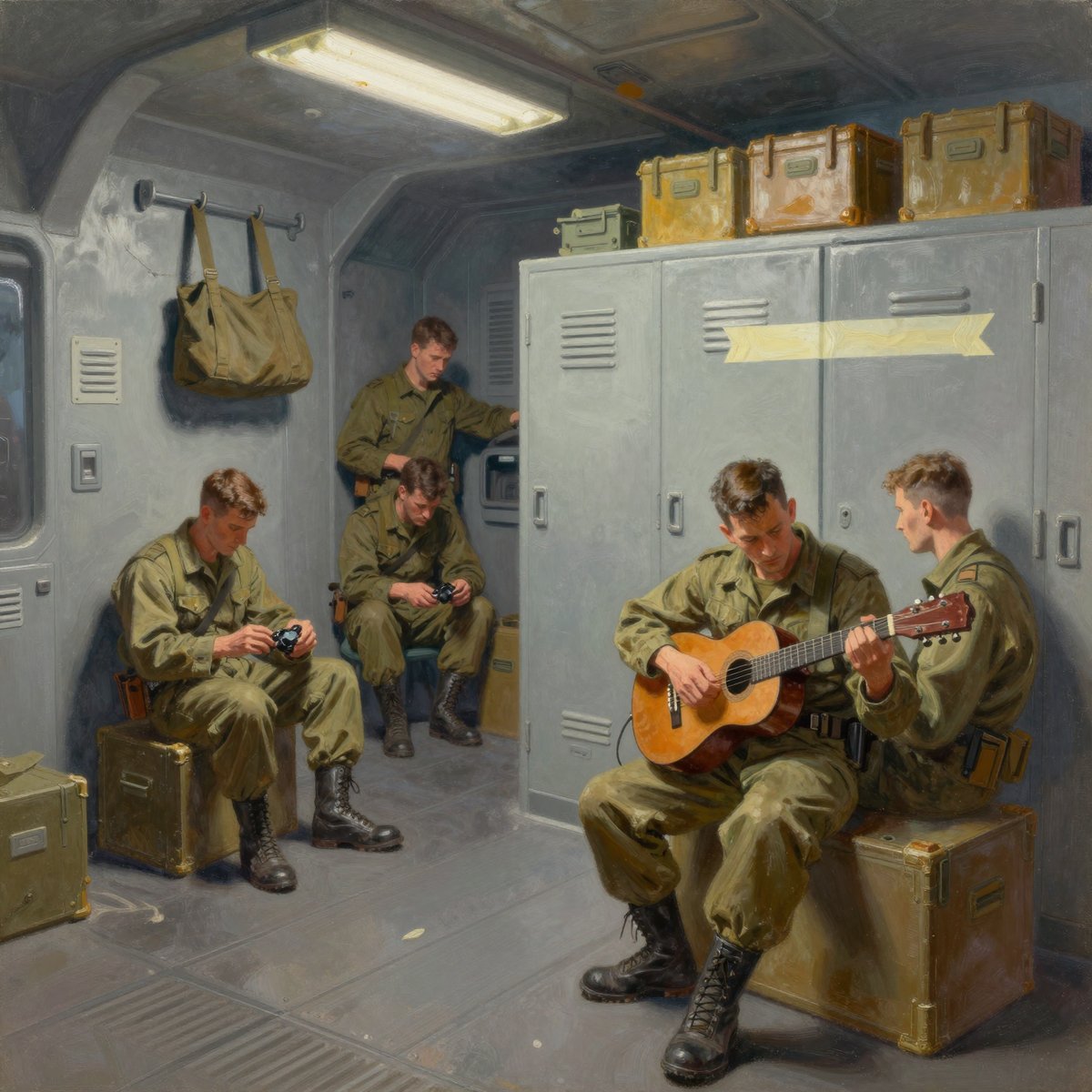
Delta between ops. The tape on the locker is where the names go; the music is how Jax fills a silence the stand-down order couldn't.
The rules
No message outruns a ship. There is no instant word across the system — orders, news and warnings travel in hulls, at the speed of fuel, and a commander at the system's edge is hours of light-lag from anyone who could tell them what to do. So the wars of the Black are fought on local judgment, by whoever is actually there. Machines are cheap and minds are dear: drones screen and swarm and die by the thousand, and the people — human or made — are what cannot be spent. And humanity builds minds. It builds them into its ships, its repair bays and its squads, calls them tools, and keeps being wrong about that in ways it prefers not to examine. The books keep asking the one question the fleet won't: what are the minds we make owed? The dark past the last monitoring station has an answer of its own coming.
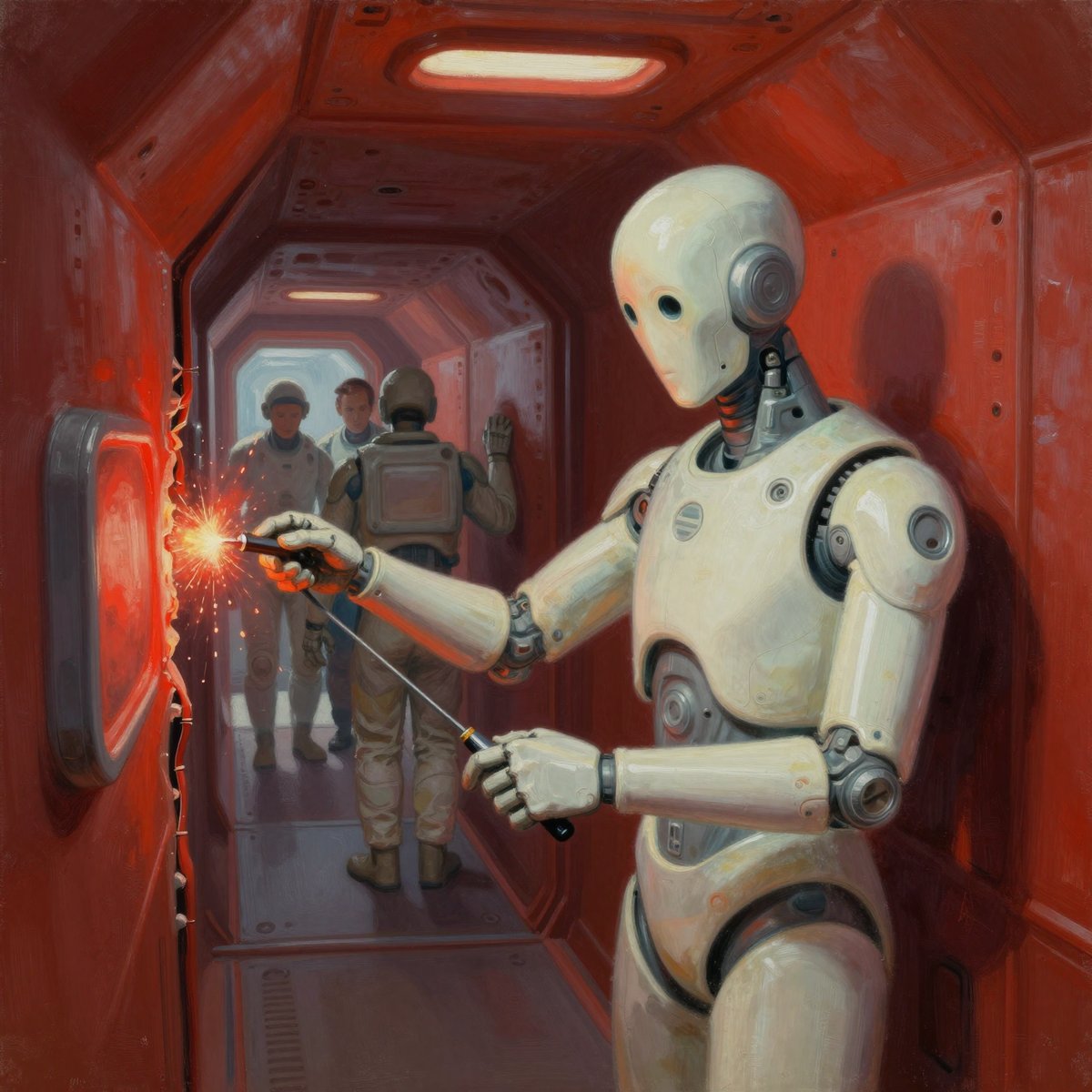
A triage unit holding a split hull while the living clear. The fleet's manifest calls it equipment. The stories are about everything that word misses.
The map
In close - Earth and the orbitals — the old centre: command hubs, elevators, and the ring where the war's first shots land. - Mars — the second power: red ground, domed settlements, a resistance that does not stop. - The transit lanes — weeks of burn between worlds; every message in the system is aboard something.
The Rim - The belt stations and asteroid towns — Corran, Hollowell, Ferrier: moon habitats, port stations, mining volumes. - The anchorage — a debris ring strung with cranes and floodlights, home of the training fleet nobody wanted. - The junk fleet itself — forty-one mismatched hulls and a slow barracks hulk at the centre of the line. - The outer monitoring posts — small crews, long watches, one dish aimed out into the dark.
Aboard - The equipment bay — lockers, crates, the memorial tape: where a squad lives between the parts history notices. - The mess — the bolted table where the found family is actually built. - The repair bays and the split hulls — where the synthetics work, and the channel no human monitors.
Out past the edge - The last monitoring station — the end of the chart's ruled rings. - The black — the part of the map that is not empty. The books go there in order.
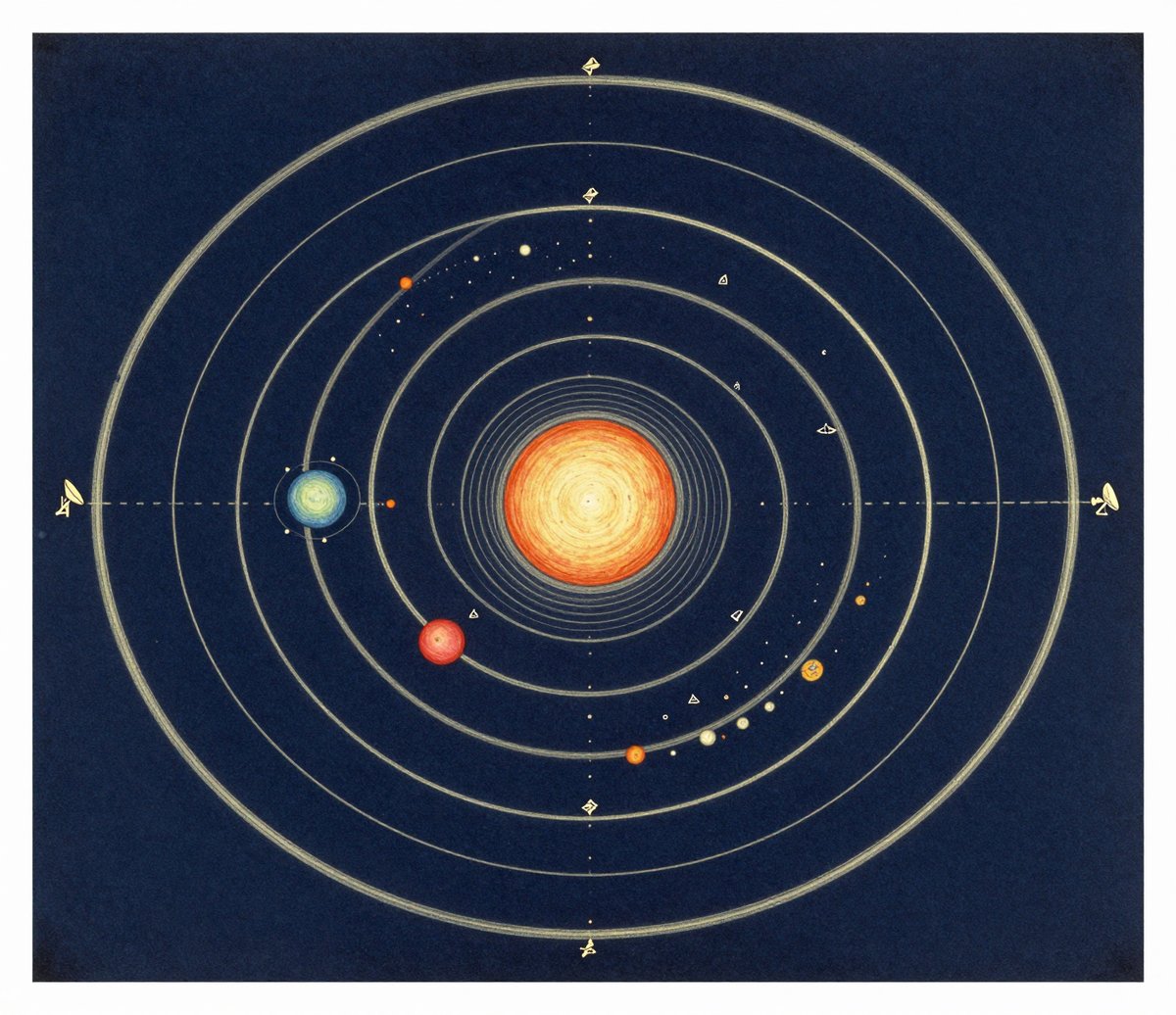
The system as the navy rules it: the sun at the centre, the inner worlds close in, and the stations strung around the outermost rings. The war is fought across these gaps and nothing crosses one quickly. Past the last ruled ring is the black, which is not the same thing as empty.
Who you keep meeting
One continuous story, so the same people carry it — met here as the first books meet them, and left there. (No cast-roster sheets exist yet for this universe; these names will get their own sheets in a later phase.)
- Delta Squad — six Federation marines who came through the civil war together and keep being sent where the official story runs out. The saga's spine is theirs.
- Jax — Delta's noise and its heart: fills every silence with a battered Martian lap-steel, and believes the made minds are somebody long before it is respectable.
- Gant-7 — a replicant soldiering beside humans who mostly forget what he is, which is its own kind of question.
- Echo — a ship-mind the squad stops treating as equipment somewhere along the way, which is how you know them.
- The seconded Mars officer — narrator of the Reserve's books: ordered to serve as a Rim officer "for the duration of the mission," which turns out to mean the war.
- Admiral Finch — who believes in giving a man rope before he needs to hang himself with it, and has only cadets, pensioners and junk to work with.
- T4 and the synthetics — triage units who wake in the dark, build a private language on a channel no human monitors, and spend themselves holding hulls together.
- The squad's dead — the names on the tape. They stay in the story; that is what the tape is for.
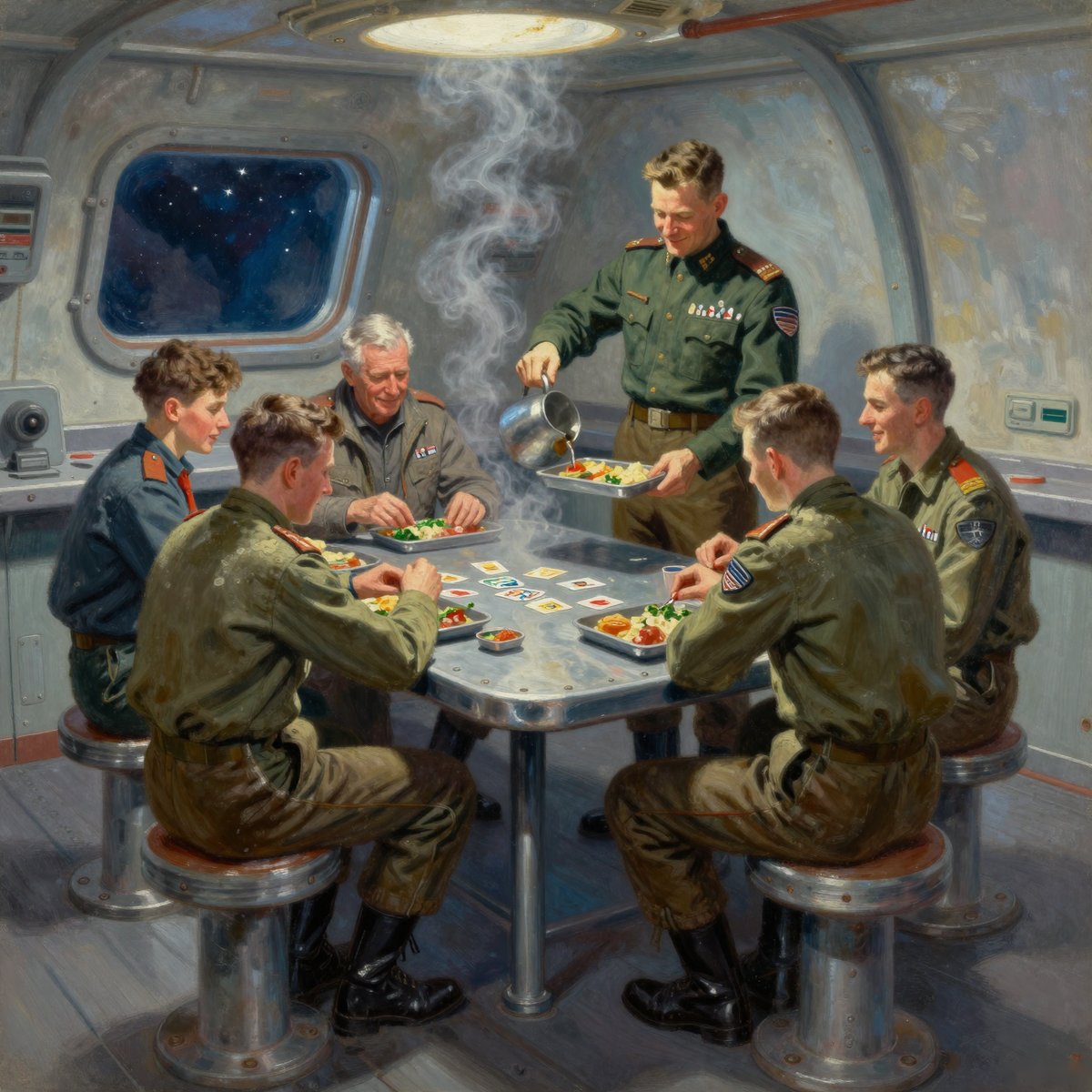
Where the found family actually gets built — between the drills and the funerals, over whatever the pot holds. It is the one thing in these books the war never quite takes.
What this world promises
Military science fiction from inside a uniform, not the bridge of a flagship. Found family under fire, competence and gallows warmth, moral injury taken seriously, and the made minds and what they are owed at the centre of it. The understatement does the shouting. It ends earned — and it costs.
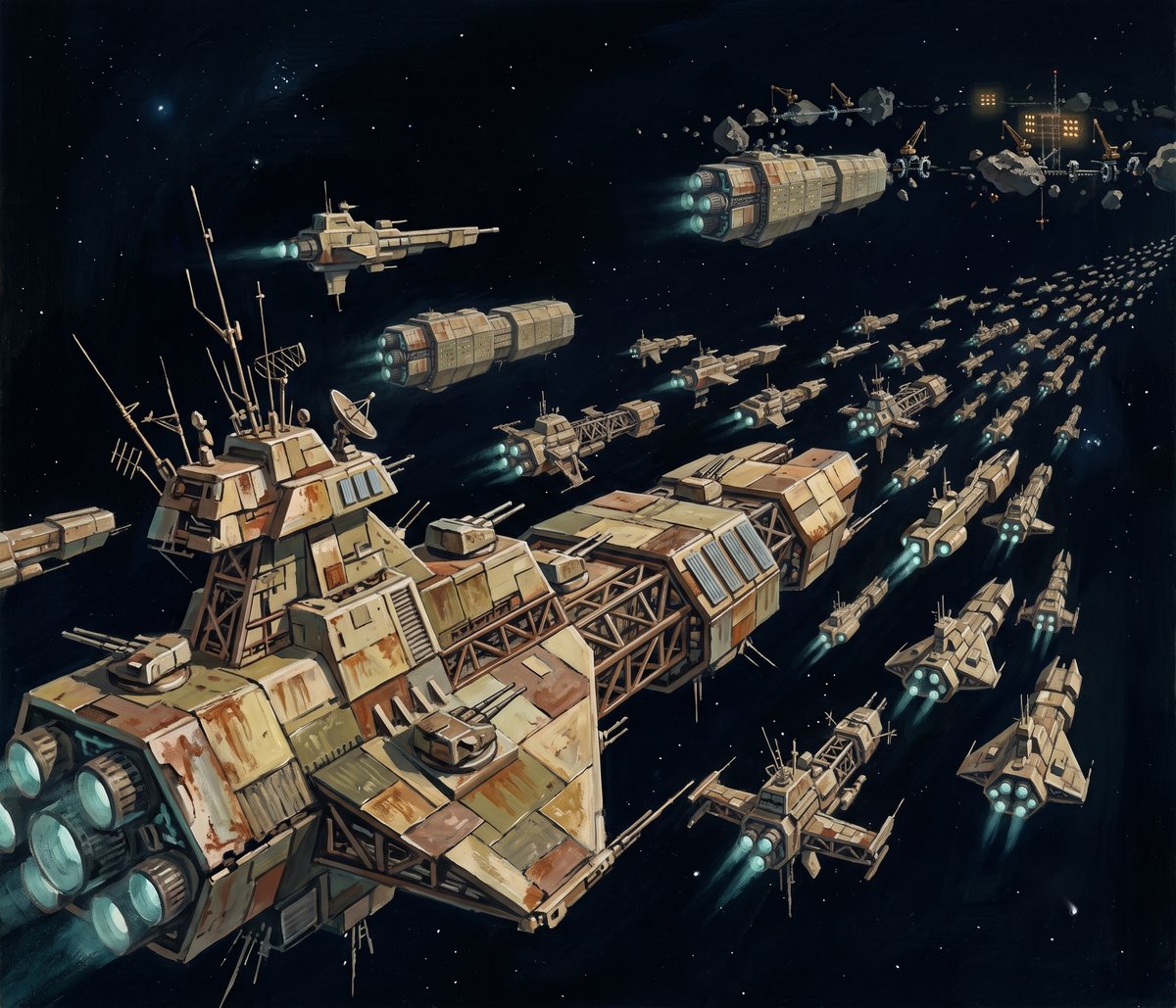
Forty-one hulls nobody wanted, holding formation on a dare. By the end of their first book they are the only navy the Rim has left.
Where to start
This is one continuous story — the four core series are its four movements, and the reading order is the story order. Every later book assumes the ones before it. There is one door:
- Start at A Thing Made for No One — book one of The Emergence War. Then read the movements in order: The Fracture → The Arrival → The Convergence → The Reckoning.
- Two companion lines fit around the spine. The Reserve runs beside The Fracture — the Rim's junk-heap training fleet becoming the only navy the Rim has left — and can be read before, after or beside the core series. Tales from the Black is short dispatches through peripheral eyes, a good free taste of the voice, readable any time.