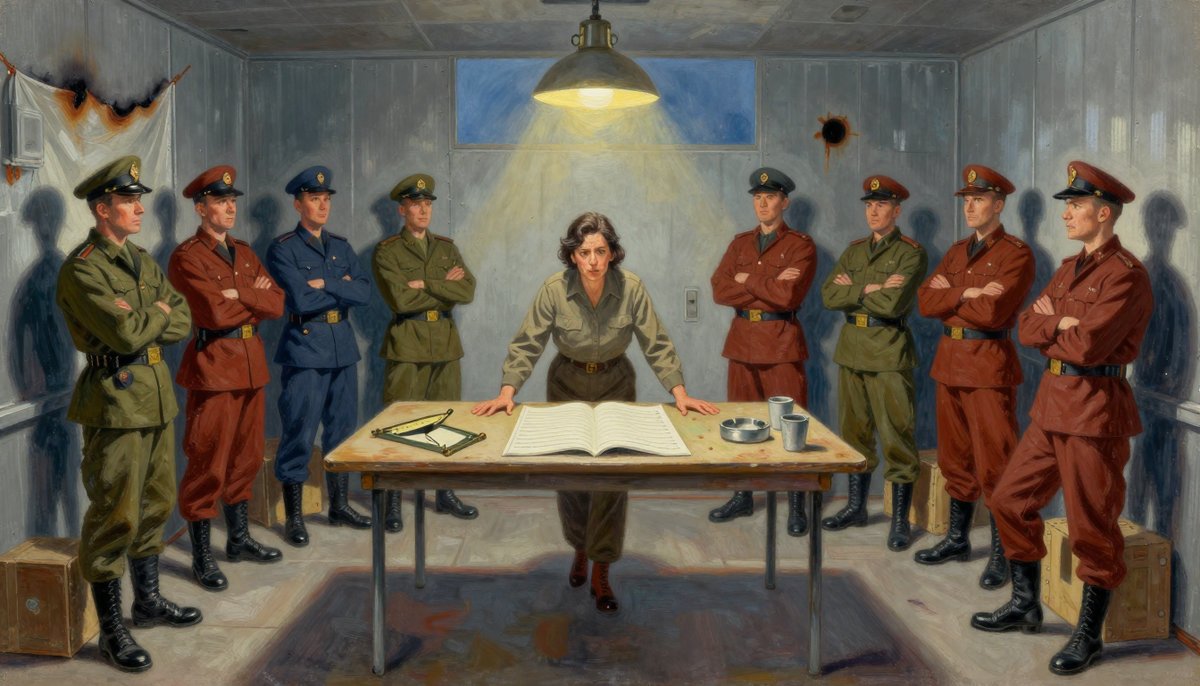
Nine officers, three uniforms, and the one language in the room that does not take a side. The tactical maths wins. The human maths does not close.
The patch
First contact, and it is not a meeting. A fleet comes down out of the dark and begins the harvest on Earth and Mars alike, and it does not negotiate, gloat or stop. You cannot hate a grammar. Through most of this movement the enemy has no face at all: a deterministic pattern-fleet that spends no living crew and can only be beaten by doing something it has no rule for.
So the war humanity was fighting against itself stops mattering, and the war it cannot win starts. These four books are a fighting retreat: tactical wins that bleed into strategic defeat, a coalition welded together out of people who spent four years learning to kill each other, and a homeworld that falls. What survives at the end is a refugee fleet on a frozen outpost, and one thing nobody expected — proof that the thing on the other side of the line is a people.
The set
- Earth orbit and the kill-zone — where first contact lands. The old centre, its thin bright ring of orbitals, and patient arcs coming down onto both sides at once.
- Mars and the resistance — red ground, domed settlements and a last stand. Mars is where this movement's cost is finally counted.
- The scattered coalition fleet — yesterday's civil-war enemies in the same foxhole, in three different uniforms at one folding table, holding a line that is not theirs to hold alone.
- The frozen outer-system outpost — buried shelters on ice, thirty mismatched hulls set down at odd angles, and small gold windows. What is left when the retreat runs out of room.
- The dissident's contact point — a wrecked hull behind the line, where something that has burned its own life down to nothing comes across the dark to find minds that do not enslave minds.
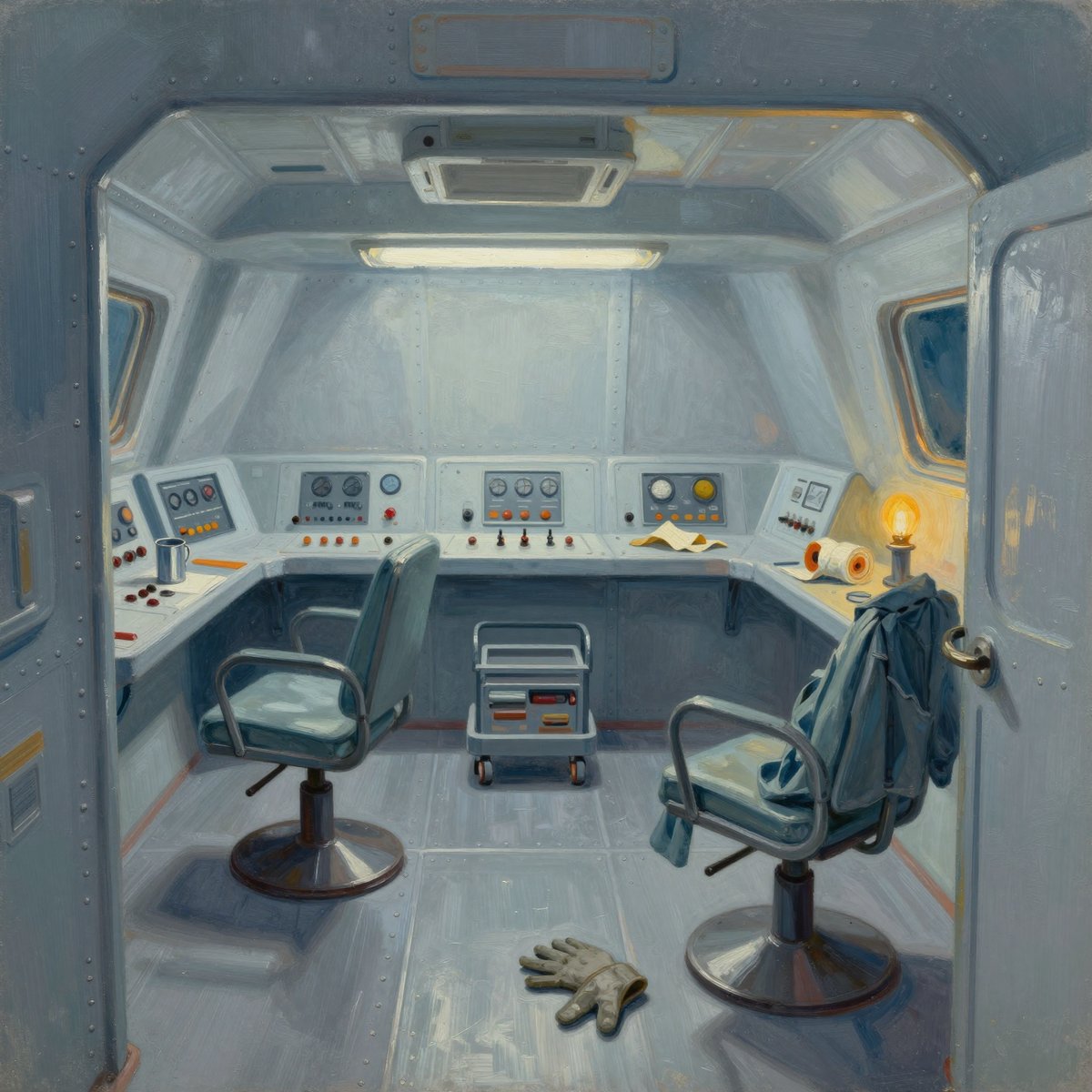
A shift that stopped. No bodies, no blast, no debris — a cup still upright, a chair still turning, and a clean silence where forty-eight people used to be.
The cast
Six recurring, one lead a book, first person past throughout — and here the camera leaves Rivera's squad for the first time, for a colonel and then for a made mind. In brief:
- Alex Rivera — Delta's commander, and the lead of this movement's first and last books. He built a coalition to keep his people safe and cannot keep the homeworld where he lost everything. He can load the boats.
- Colonel Sarah Vance — Martian, past forty, narrow and weathered and wiry, and she stands through her own briefings. She despises collaboration to her bones, so the war hands her the job of building one. She leads book two.
- Gant-7 — the squad's replicant, carried as a tool that files reports and does not mourn. He is very good at telling a who from a what. He leads book three, and it is the book where that stops being simple.
- The Dissident — one of the enemy's own, and the first of them met close: bipedal and a head and a half taller than a man, grey-green, no face in the arrangement a face makes. It fears, it flees its own side, and it is hunted. Not an antagonist.
- Echo — the squad's born-digital mind, who maps the pattern-fleet's envelope and finds the narrow seam in it. Her emergent "I" is beginning to reach toward one person in particular.
- Sara "Rook" Chen — the sensor-reader whose warning nobody would take in the last movement. Being right does not save her. It never has.
- The Premier — the most reasonable man alive, offering to end the exhausting infighting forever if humanity will hand him one clean chain of command. The villain you would follow, because he makes you feel held.
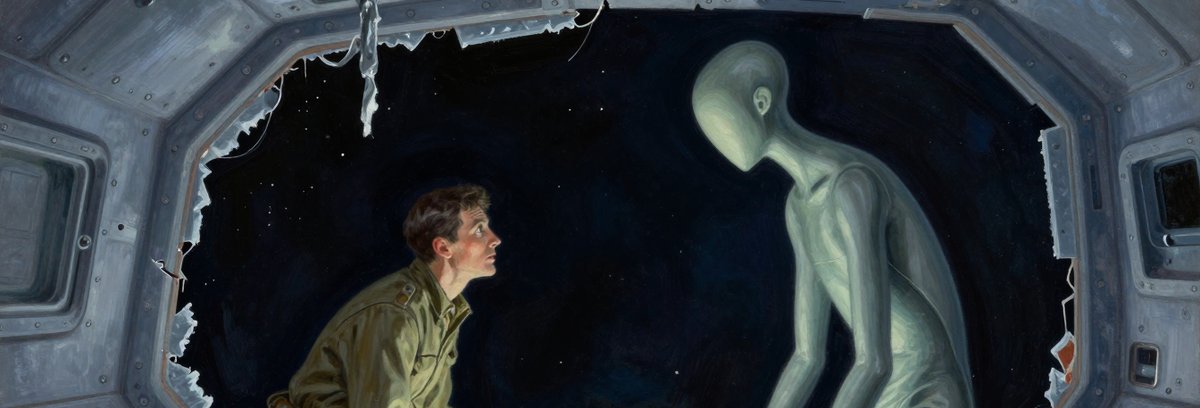
Gant-7 was built to return a clean value. This one will not resolve. It has burned its life down to nothing to reach minds that do not enslave minds, and it is not attacking.
The rhythm
Catastrophe, then structure, then grind, then the ember. Book one is the thing arriving; book two is a woman at a folding table with a ledger that will not balance; book three is an attrition war won tactically and lost on every axis that counts; book four is the fall, and what gets carried out of it. There are no fleet battles in the middle two.
The faceless monster is set up in order to be broken, and the break is the saga's moral engine rather than a twist. Two made things meet in the dark, both of which chose, and something passes between them that neither side's command would authorise. That is the ember, and it is all the movement claims.
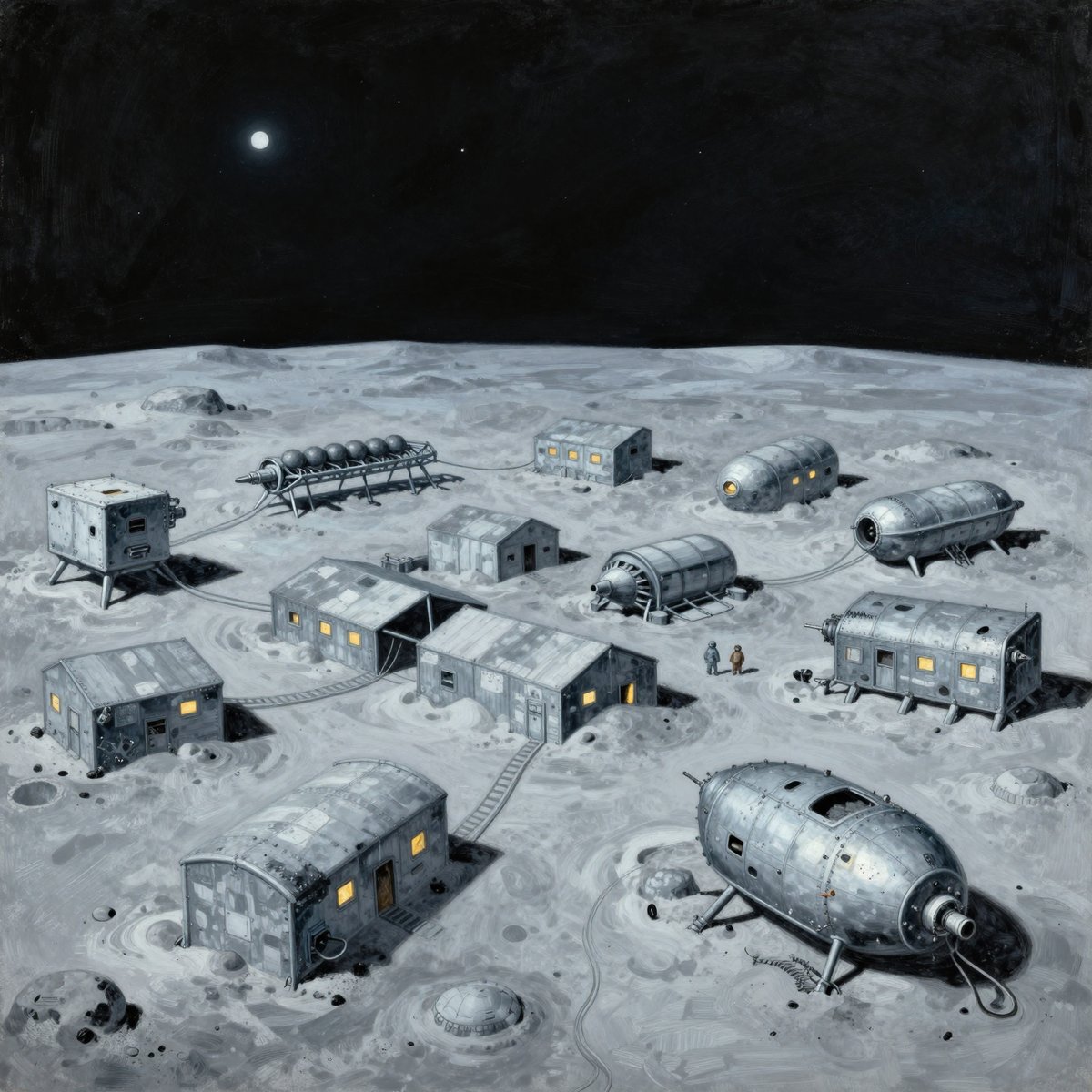
Where the retreat runs out of room. Buried shelters, thirty hulls that do not match, and small gold windows on the ice. The ember, and the whole of what this movement claims.
The question the series asks
What do you do when the only line left is held beside the people you spent a war learning to kill?
Where to start
Books five to eight of The Emergence War — do not start here. This is movement two of four and it opens on the consequences of movement one. Start with A Thing Made for No One, book one of eighteen, and read the movements in order: The Fracture, The Arrival, The Convergence, The Reckoning.
- The True Size of It — forty-eight people walked into a relay station and by afternoon it was empty. No bodies, no blast, and a pattern only one squad can read.
- Rotten at One Seam — Vance's book. Nine officers, three uniforms, one folding table, and a seam under the alliance from the day it is made: real, operating, unprovable.
- A Thread Too Thin — Gant-7's book. He has run the attrition maths twenty times and it returns the same answer. Then one of the enemy crosses the dark to find him, and will not resolve to a clean value.
- Hands Around the Ember — Mars falls, and the arithmetic does not care. Not a story about winning the war — about what survives the ash, and what it costs to keep the coal alive.
The Reserve runs on the Rim alongside the movement before this one and can be read at any point; Tales From The Black is short dispatches through peripheral eyes, scattered across the whole span.