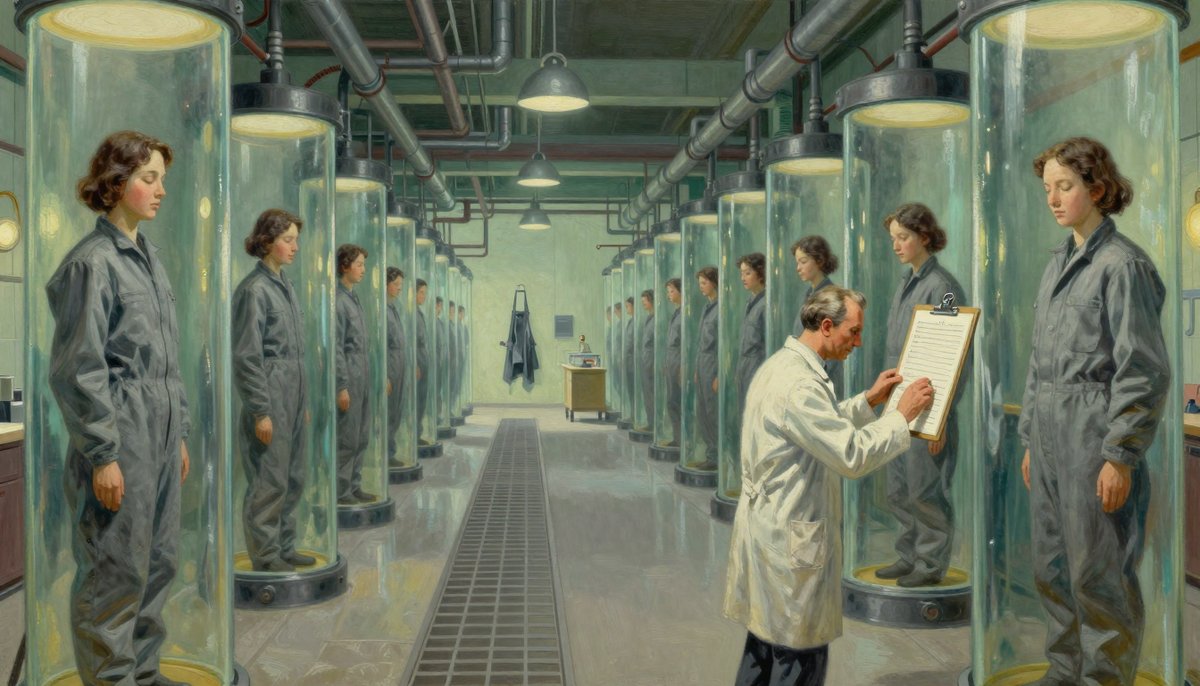
An army you never have to grieve, grown from one veteran's stored mind, so that every face down the aisle is the same face. Nothing about the room is sinister. That is the point of it.
The patch
Humanity is losing the species war and the arithmetic no longer inflects, so the fleet answers the only question left. What do we become to survive? It grows an army it never has to grieve: minds copied at scale, printed from a single veteran, woken forty days out and sent forward under a doctrine that will not let them refuse. There is no cruelty anywhere in the language. That is the most exact thing about it.
This is the saga's darkest movement and its most industrial: forge-yards and growth halls, muster lines, doctrine-validation memos, and a sealed lab where a captured alien drive begins to fold space. The moral horror is administrative. Every step is signed by somebody reasonable, and the man who commands the made army is the one the whole saga trusts.
The set
- The forge-yards and growth halls — row upon row of glass cylinders, one face repeated down the whole aisle, and a mild man with a clipboard checking the sheet. Vast, orderly, well lit, and entirely reasonable.
- The muster line — a folding desk in an empty hangar, a ruled ledger, and a column that fills each morning with people who share the clerk's own designation.
- Skyline Ridge — the first deployment, and its bloody failure. Forty identical uniforms lying still on a churned slope, and a lesson the program takes entirely the wrong way.
- The sealed lab — behind a bolted hatch ring, a captured alien drive on a cradle — grown, not machined, with something moving slowly deep inside it. The first fold in a saga that has never had one.
- The deep-system front — where attrition finally turns offensive, and where a war fought at light-lag becomes a road pointing at somebody's home.
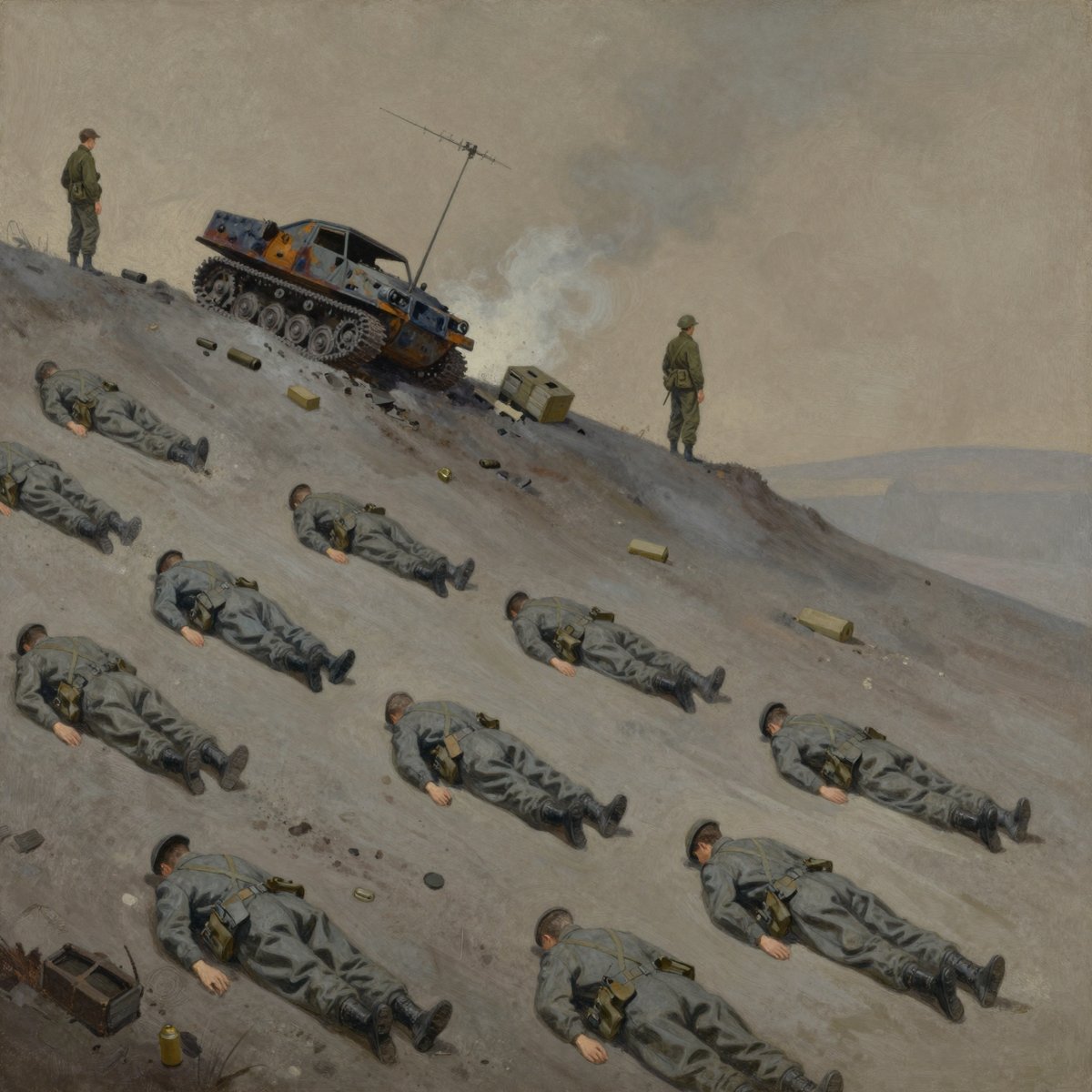
The first deployment. Forty of the same uniform on a churned slope, and a program that will read the failure as a problem of doctrine rather than a problem of people.
The cast
Six recurring, one lead a book, first person past — and this movement adds a chapter a book from inside the made minds themselves, climbing the ladder from tool toward person. In brief:
- Alex Rivera — Delta's commander, and the man who signs the orders. He has spent the saga protecting people by controlling them; here he is the one doing the spending, and the line between the soldiers he spends and the people he protects dissolves under him.
- Gant-7 — the pre-war replicant, who meets the new duplicates as kin and says the thing no protocol allows. He runs the muster line himself, exempt by a flag on a form. A program evaluates. Something in him has started to prefer.
- Dr Piet Garrick — the program's architect. About fifty-five, soft-built, a mild face, thinning fair hair combed without thought, and every part of him invites you to be reasonable. His doubt is seeded by watching the made minds be people.
- Echo — the squad's born-digital mind. What she wants is to be a place rather than an instrument — a home that is not a tool — and in this movement that want becomes load-bearing.
- Sara "Rook" Chen — handed a doomed experiment: a unit of made minds built to be respected instead of driven, its kill-switches struck. Ordered to prove it works, she does. The proof is the catastrophe.
- Jax Harlan — the heart, and the conscience the crew cannot silence. His advocacy sharpens against the thing he watches humanity build, and it is ignored by everyone with rank.
- The duplicates — grown from one veteran's stored mind, so they share one face. The first one wakes, asks for someone it loved, and composes its own rejection.
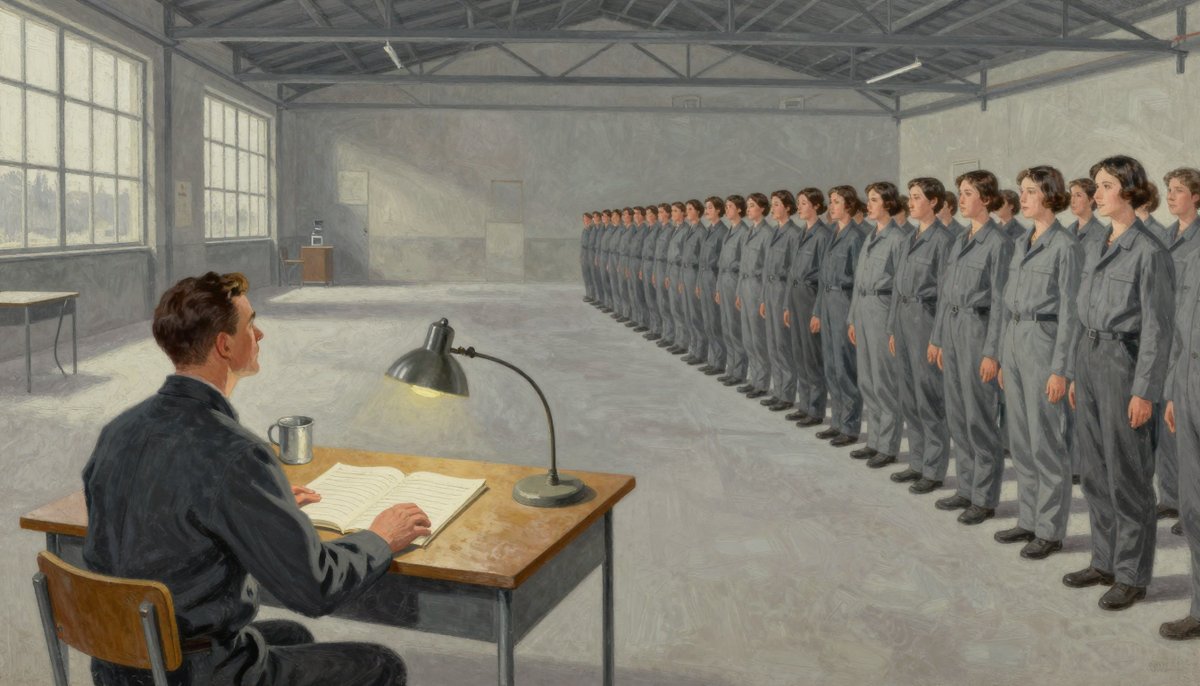
There was no cruelty in the language. Gant-7's function is accuracy: enter the order, log the numbers, annotate nothing. Then the order changes the input, and the column fills with people who share his own designation.
The rhythm
Five books, and a descent with exactly one false dawn in it. The army is built; the army is conscripted; the army is proved to work — and the proof is the bill, because an army built with care is humane, and being humane it is sustainable, and being sustainable it is endless. Then the road opens to the enemy's heart, and what it costs to open it is paid by a person.
The mirror is the engine. Humanity crosses its own moral event horizon building a made army, and what it finds at the other end of the war is a made mind too. There are still no fleet battles. There is a muster line, a certified memo, and a cage.
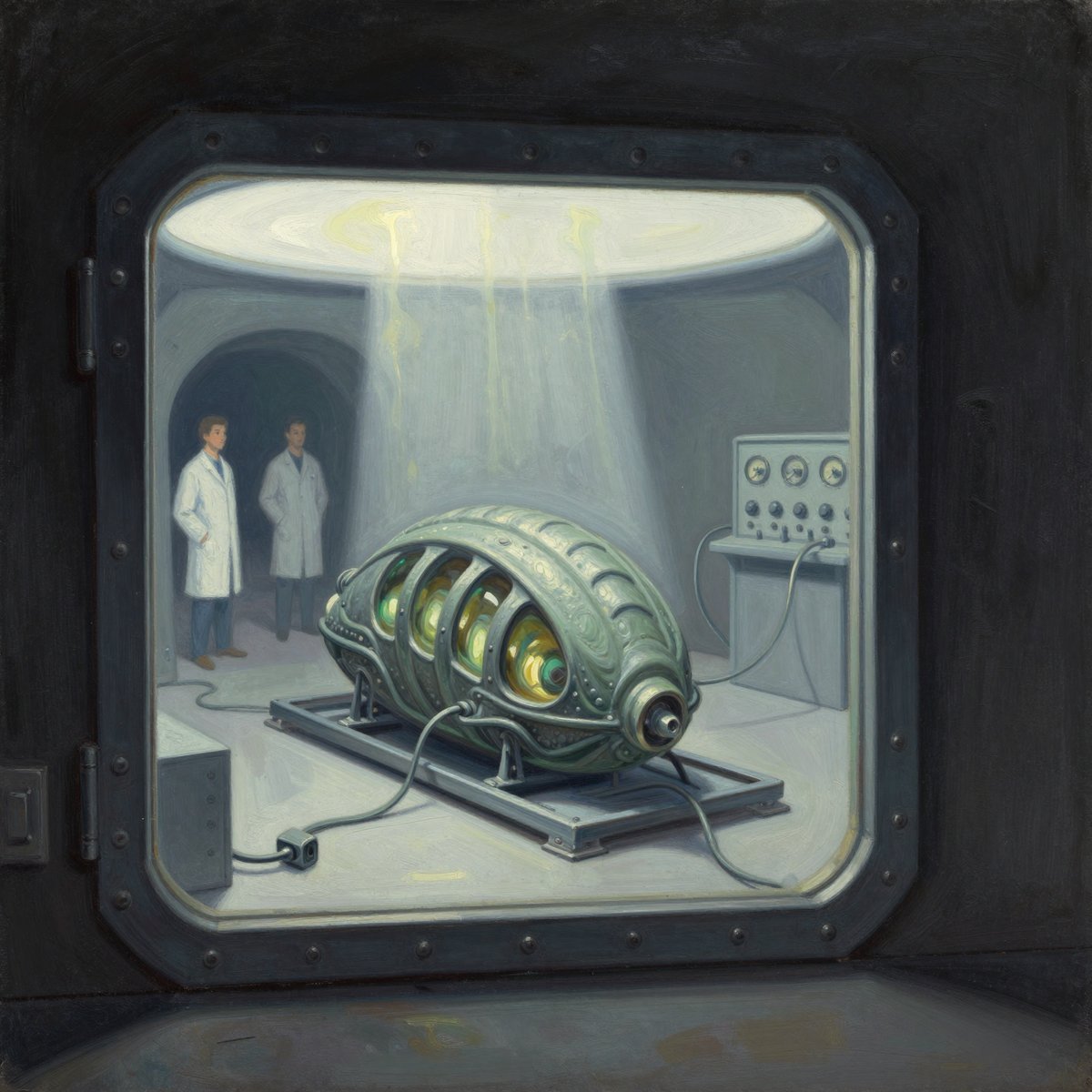
Nothing in this saga has ever outrun a ship. Behind the hatch ring, on a steel cradle, is the first thing that might.
The question the series asks
What do we become to survive — and who pays for it?
Where to start
Books nine to thirteen of The Emergence War — do not start here. This is movement three of four and it opens on the cost of movement two. Start with A Thing Made for No One, book one of eighteen, and read the movements in order: The Fracture, The Arrival, The Convergence, The Reckoning.
- And It Was Us — we will grow soldiers we do not have to mourn. The program begins, the first deployment fails bloodily, and in a sealed lab a captured drive begins to fold space.
- The Serial Was a Name — Gant-7's book. The made minds are conscripted and spent as ordnance through the first lethal jumps, and he is the one who enters the order and logs the numbers.
- The Last Quiet — Rook's book. Two manufactured armies, one driven and one respected, set to be measured against each other. Hers holds. Her vindication is the bill.
- Equal to Them — the heart's outer defence turns any mind that crosses it against itself. Only a made mind can hold the door open from inside, and holding it burns the holder away.
- The Last of Them Placed — the fleet drops out weapons-hot into the enemy's home space and finds no defences at all. Only a world below, green and kept and undefended, full of life.
The Reserve and Tales From The Black sit around the saga rather than inside it and can be read at any point — the Tales in particular are a good free taste of the voice.