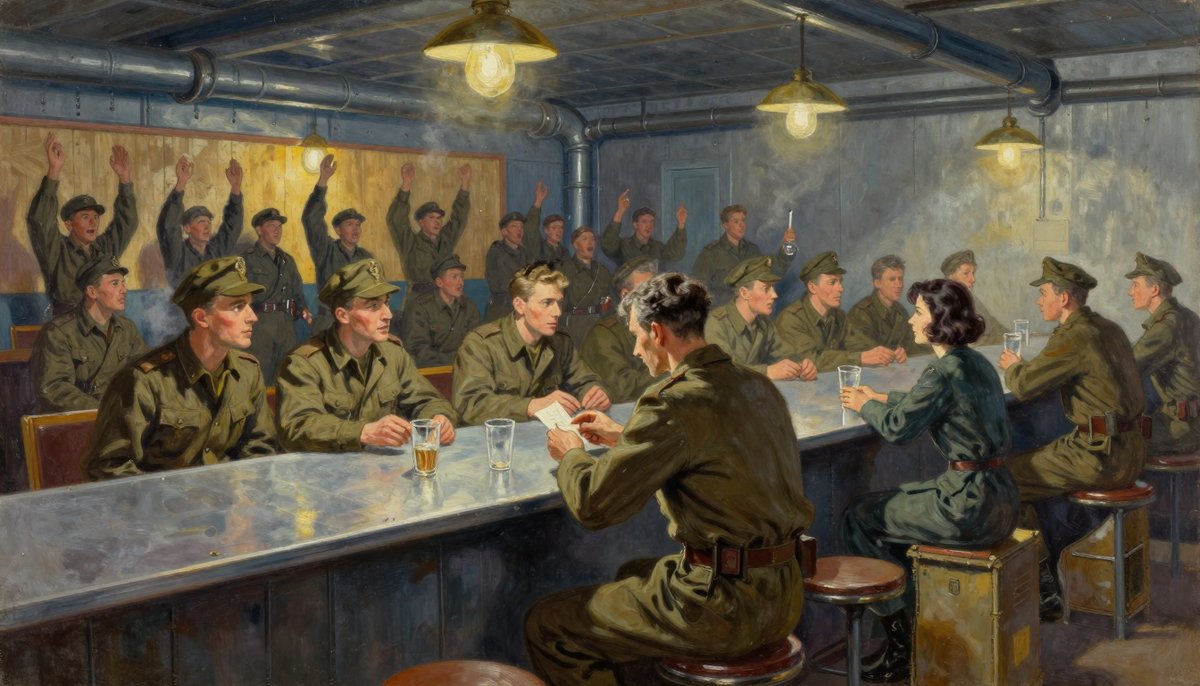
An era of lasting peace, announced on the official channel in the warm institutional cadence command keeps for funerals and treaties. Most of the room believes it. The people who have been listening for four years are the ones not standing up.
The patch
A civil war between Earth, Mars and the Rim, four years deep and officially over. It is not a war of great fleets seen from a flag bridge. It is fought at squad range by people who have learned the smell of a stand-down that holds and the smell of one that does not, and this one has no smell at all. Nothing here travels faster than a ship, so every order arrives late and every commander decides alone.
Then the armistice breaks, and the lawful order Delta Squad is handed turns out to have a school logged as a warehouse and a clinic filed as a depot inside it. The peace was staged. The purge is the plan. Refusing makes them the enemy, and from that afternoon these books are about six people, two made minds and a war they can prove is a lie that nobody will let them prove.
The set
- The Armistice-Day bar — a station drinking hall on the night command announces an era of lasting peace. Everyone celebrates except the people who have been listening for four years.
- Mars, under a suppression order — rust-orange dust, residential tiers, and a target list that reclassifies what it hit four hours after the fact. The atrocity is done in daylight, by procedure, with a calm voice in your ear.
- The Federation command hubs — tiers of consoles and a gallery above them, where a man in an immaculate uniform decides what a thing will be called. The institution never raises its voice.
- Delta's transit and assault ships — a bunk rack, a taped cable loom, a coffee tin in a bracket. After the refusal these stop being transport and become the only address the squad has.
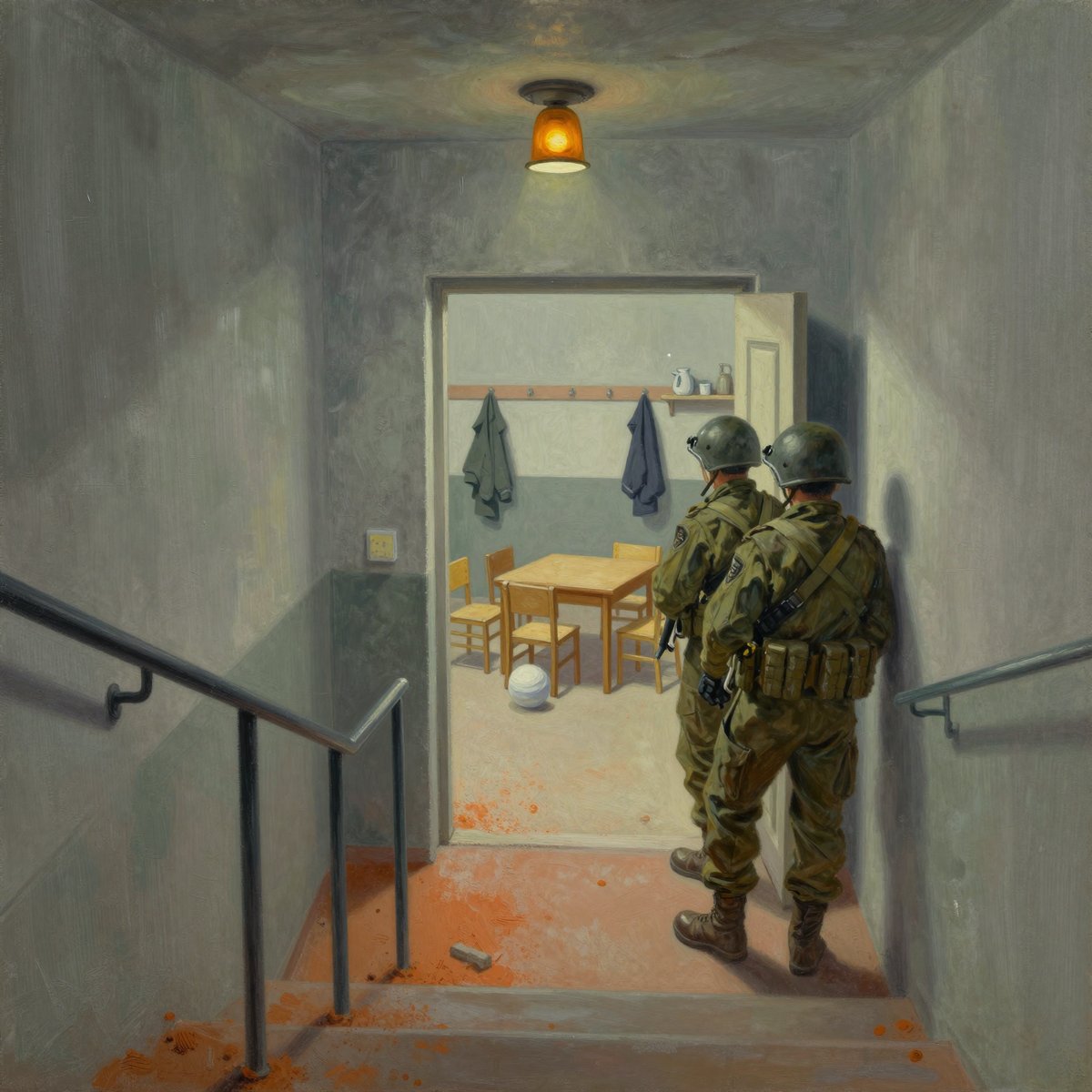
What the target list called a warehouse. The order was lawful, the voice in their ears was calm, and the reclassification came four hours after the fact.
The cast
Six recurring, one lead a book, first person past throughout — and the lead changes as the movement goes on, which is how you find out what the squad is made of. In brief:
- Alex Rivera — Delta's commander. Thirty-nine, twenty years in, grey coming into dark hair and worn down to the working parts. Folds a paper bird for every soldier he loses. Jaw and hands are his tells, and he leads book one.
- Gant-7 — a replicant, grown adult and issued to the squad as equipment. A face somewhere in its thirties with no history in it. Speaks in full uncontracted sentences, files what he is told to file, and disobeys his makers to save a child.
- Echo — the squad's born-digital mind, who reads an ambush forty seconds before it has walls. She leads book three. She was not built to want things, and she is starting to suspect that wanting is not the malfunction she assumed.
- Jax Harlan — Martian, thirty-one, a day past shaving, hands heavier than the rest of him. Fills every silence with a battered lap-steel guitar, and treats the made minds as people years before it is respectable.
- Sara "Rook" Chen — twenty-five, slight, dark hair cropped to regulation and no further. Reads terrain one solid thing at a time, leads in a dead mentor's borrowed cadence, and catches the thing nobody wants caught. She leads book four.
- Tank Johansson — forty-one and half again Rivera's width, has to turn his shoulders for any human door. Strength as never yielding — which is the flaw, and it is planted here.
- The Webb line — a senator who runs atrocity as procedure and a commander whose voice brands them terrorists. Webb is never brought down inside these four books — the squad gets the proof and cannot make it land. What he was serving does not fall either.
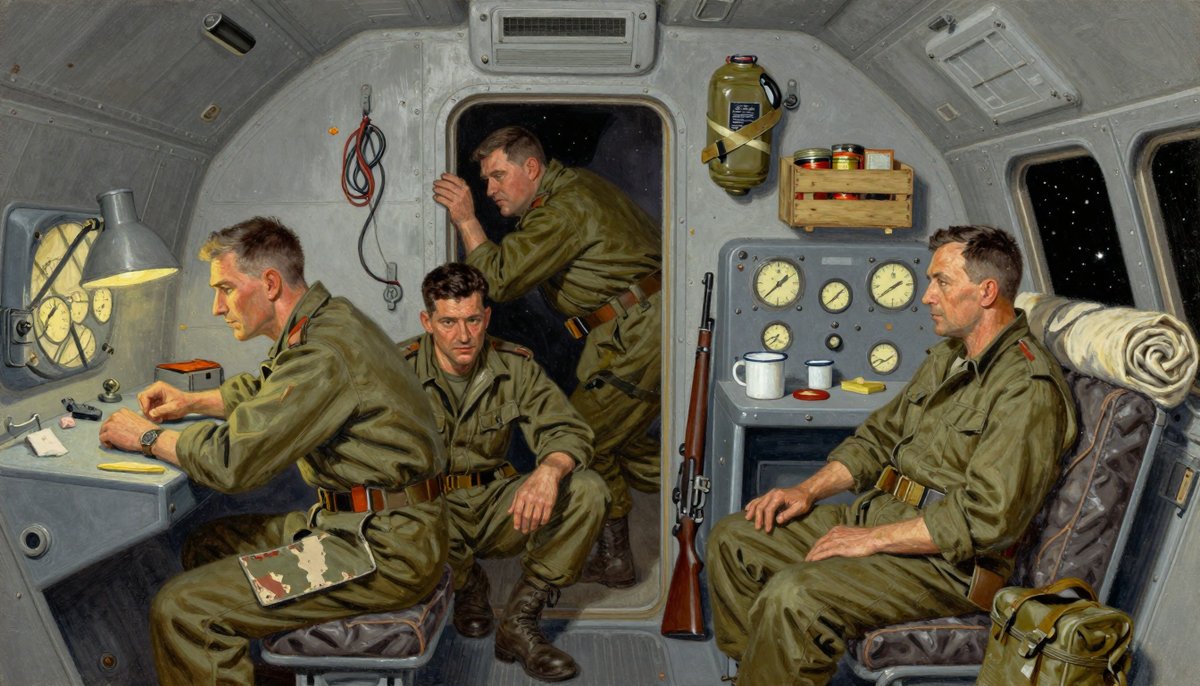
After the refusal there is no chain of command and no mandate, and the family's operating principle is the only authority left. Rivera, Jax, Tank and Gant-7, on the only address they have.
The rhythm
Four books, one continuous descent, and the camera moves down the squad as it goes: a commander, then a pilot, then the ship's mind, then the youngest of them. Each book hands the next one a thing that cannot be handed back. There are no fleet battles. The loudest act a soldier commits here is the shot she does not take.
Morally grey found-family war tragedy at squad range: competence, gallows warmth, moral injury taken seriously, and the made minds and what they are owed already at the centre of it. Nobody is redeemed by being right. The movement ends on exposure, not triumph.
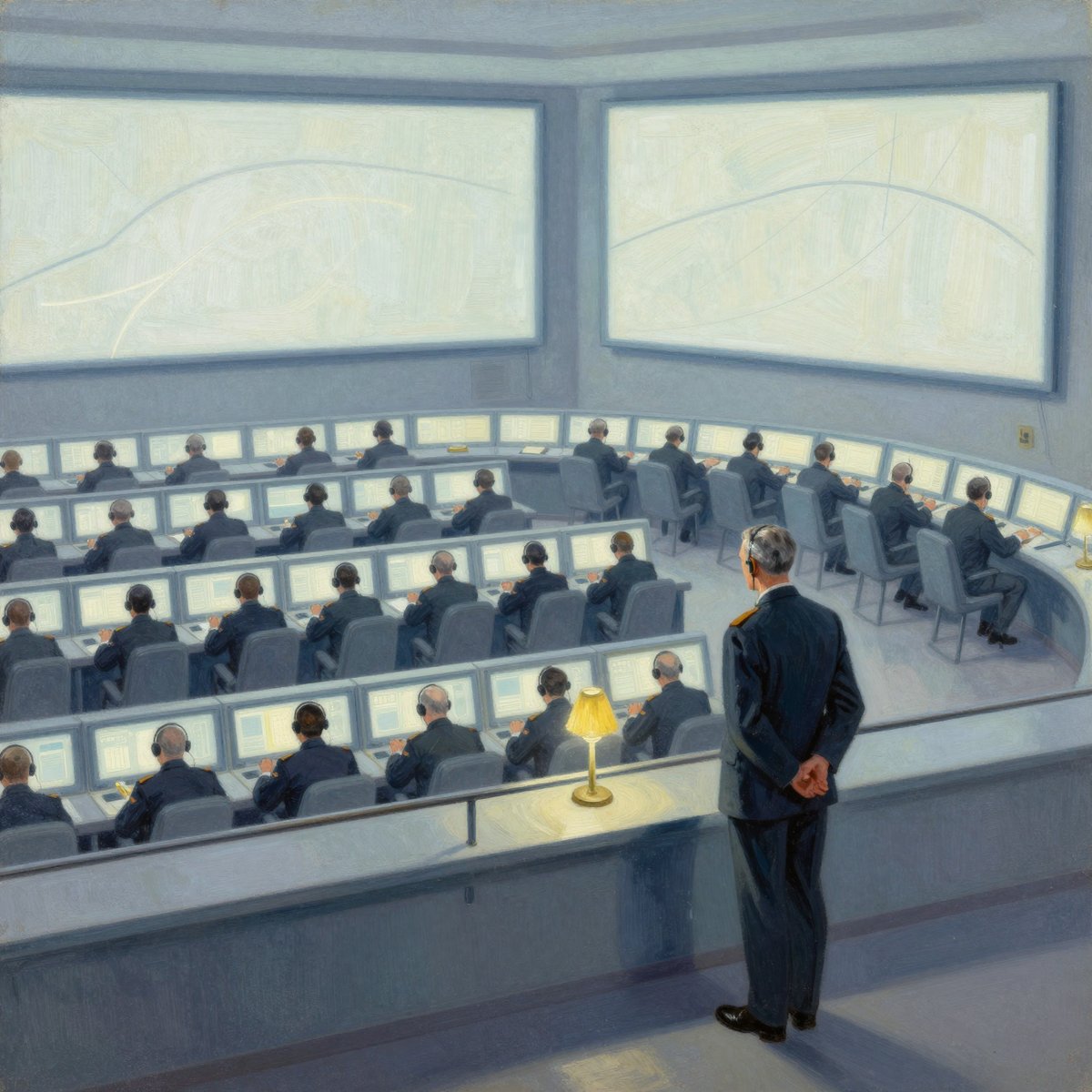
The institution that decides what a thing will be called. It does not raise its voice, and it does not have to.
The question the series asks
What do you do when the lawful order is the crime?
Where to start
Books one to four of The Emergence War, and the place to start. The saga runs eighteen books in four movements, read in this order: The Fracture, The Arrival, The Convergence, The Reckoning. It is one continuous story, not four sets you can enter anywhere, and every later book assumes the ones before it.
- A Thing Made for No One — start here. A lawful Mars suppression op turns out to be a false-flag purge; the squad refuses, and is branded.
- Enough, Not Abundant — an order arrives with the machine's own stamp where a commander's name should be, aimed at two transports that cannot know they are targets.
- What Would Not Name Itself — Echo's book. Flying escort for the convoys their own war is grinding down, she begins to log a pattern under the fighting that she cannot delete and cannot explain.
- The Floor Held — a return that comes back five times with the same geometry, on a cadence that belongs to nothing human. Proving it means building a drive that has never worked.
Two companion lines sit around the saga rather than inside it. The Reserve runs alongside this movement, on the Rim, and can be read before, after or beside it. Tales From The Black is short dispatches through peripheral eyes and is readable at any time — a good free taste of the voice.