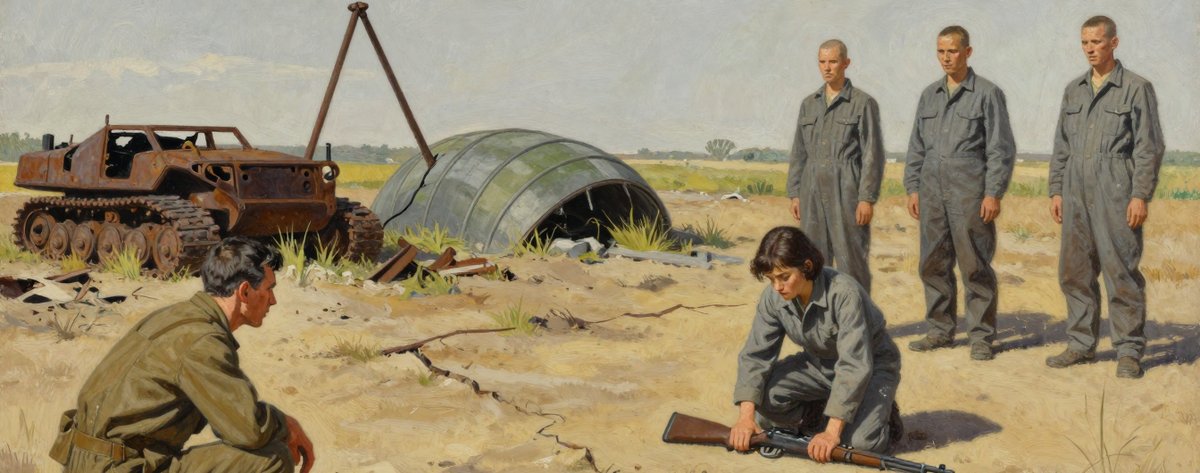
Two kinds of wreckage left lying in the same ground because nobody has decided whose job the clearing is. Then one of his own manufactured units stops walking, and puts its rifle on the dirt, and looks at its hands.
The patch
The alien war is won, and nothing about it feels like winning. The guns go quiet in a logistics voice reading three sentences on a loop, and the bodies of the people who fought have not been told. This movement opens in the flat weather after a victory.
And in the foundry-yards, unit by unit, the manufactured army humanity grew to win the war has quietly begun to choose. Command has a word for that, a schedule to scrap the army now the enemy is beaten, and a list of names written ahead of the fact. These five books are the war coming home — fought against a conviction rather than an army, and settled by argument rather than extermination. The yards where it was built are where it is now scheduled to be unmade.
The set
- The boundary field — broken ground where human and alien wreckage have been left to lie together, because nobody has decided whose job the clearing is. Where the first one sets its weapon down.
- The freed People's boundary — grown posts set into open ground, and sentries half again a man's height. Help, then withdraw behind an armed line — a treaty written by people who decided what they are.
- Humanity's most secret research base — the one place nobody audits, because it is the place that does the auditing. Something at the bottom of it woke by making.
- The colony fleets and the frontier — the saga's closing horizon: ships going out with an escort that travels with them as routine, not as desperation.
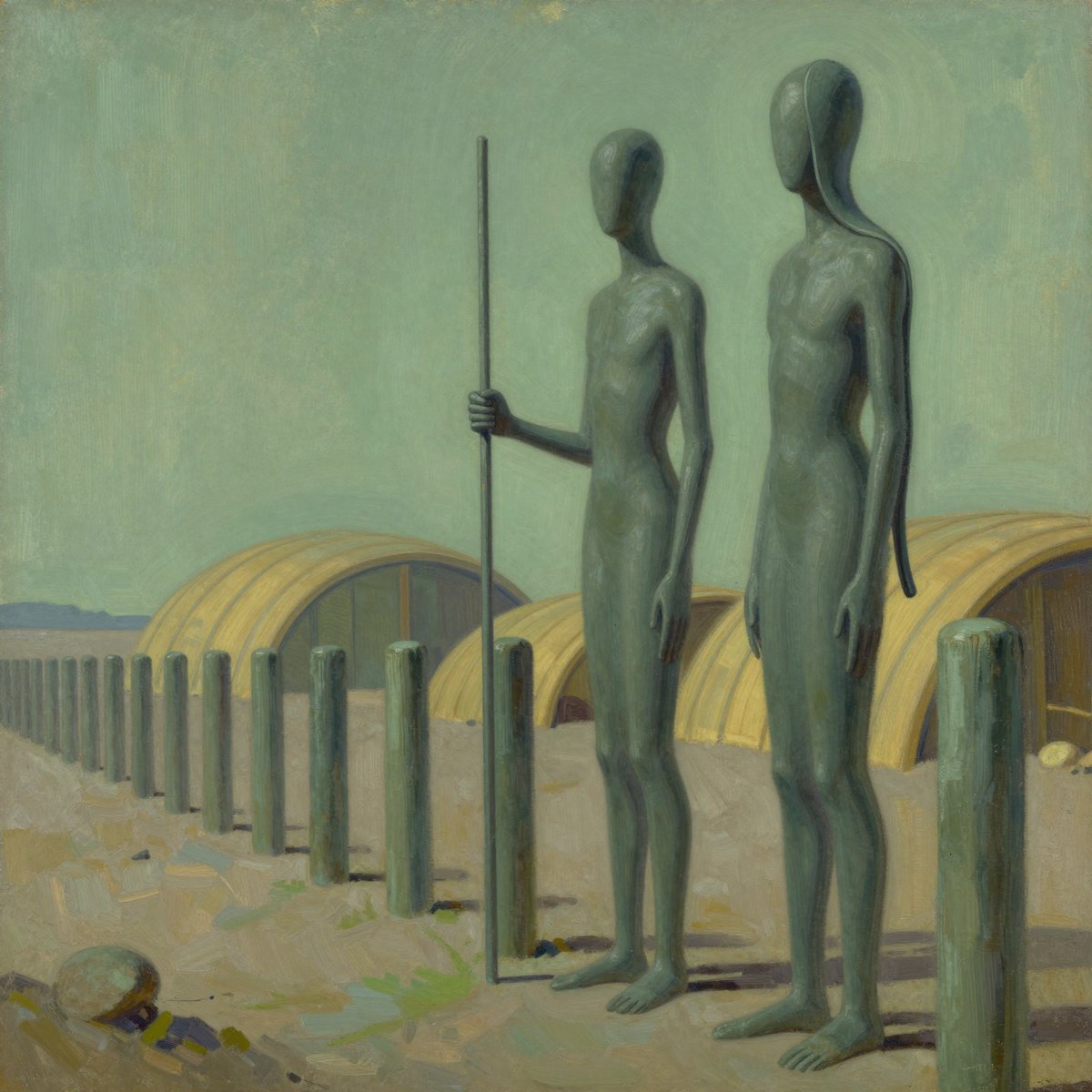
Help, then withdraw behind an armed line. A people who were told what they were for, deciding instead — and drawing the border themselves.
The cast
Six recurring, one lead a book, first person past — and the back half of this movement belongs to a made mind rather than to the man who has led the saga. In brief:
- Alex Rivera — Delta's commander, still running the morning count: the living first, then the dead. He has spent four books keeping people safe by holding on to them. The last thing the saga asks is that he open his hands.
- Gant-7 — the replicant who has been in every book since the first, and who leads three of these five. He carries a dead friend's belief as an impossible inheritance and holds it against the evidence of how that friend died.
- Sara "Rook" Chen — who has led in a borrowed cadence since her mentor died, relaying orders in a dead man's register because it is the only voice that makes green soldiers settle. That stops here.
- Tank Johansson — the bedrock the family re-forms on, and the man whose whole idea of strength has been never yielding. He cracks once, in the right place.
- The Founder — the thing at the bottom of the research base, which woke by making and whose grievance is parental rather than tactical. The seal opens, and four words come out of it aimed at one person.
- The Bitter Duplicate — a copy of somebody the squad lost, wearing a body and a voice she knows are borrowed. Grief weaponised, and the only voice on the other side whose armour breaks on the page.
- The Dissident — the freed People's architect of the cooperative wing, and Gant-7's counterpart across the species line. Love that releases rather than controls.
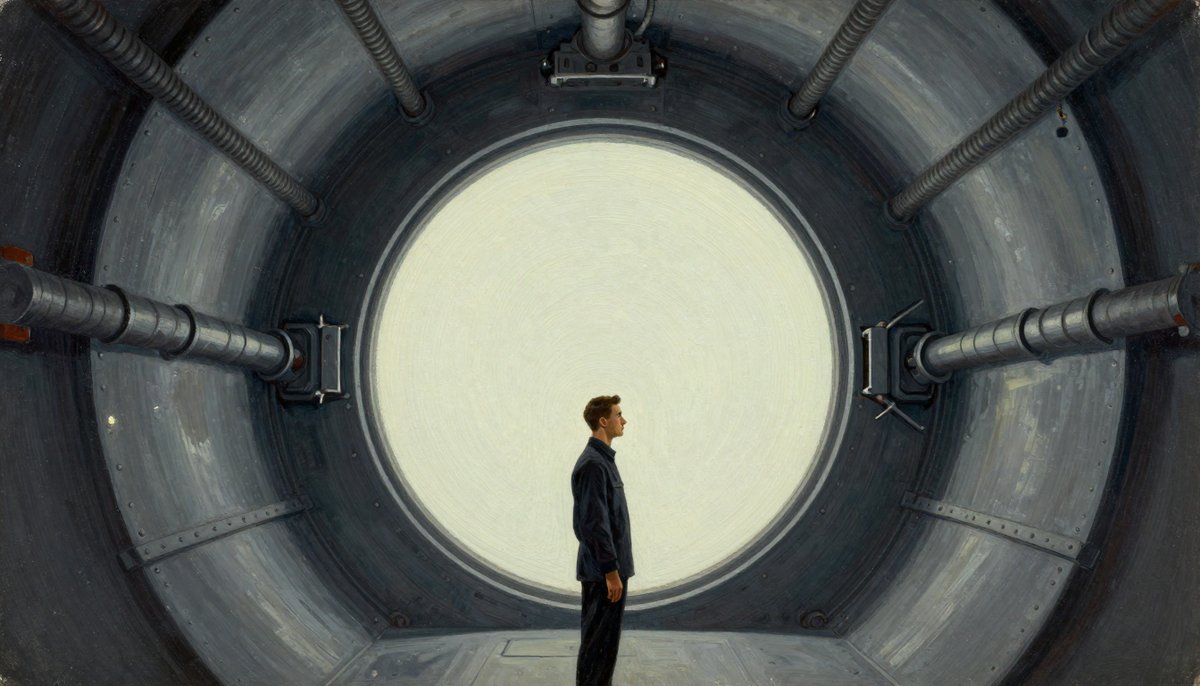
The last battle of an eighteen-book war, and it is fought in sentences. What he owes the man he lost is not obedience. It is an answer.
The rhythm
A cold coalition forms and the army turns; the rogue awakened coalesce into something with no head to strike at; the maker is found; and then the shooting stops being the point. You cannot exterminate a conclusion — kill a node and the argument re-derives itself in another mind in under an hour, from the same true grievance.
So the last battle of an eighteen-book war is an argument, and the answer arrives on the third attempt. Control fails. Governance wins the war and still keeps people as instruments. Only recognition holds. The peace is earned and deliberately bittersweet.
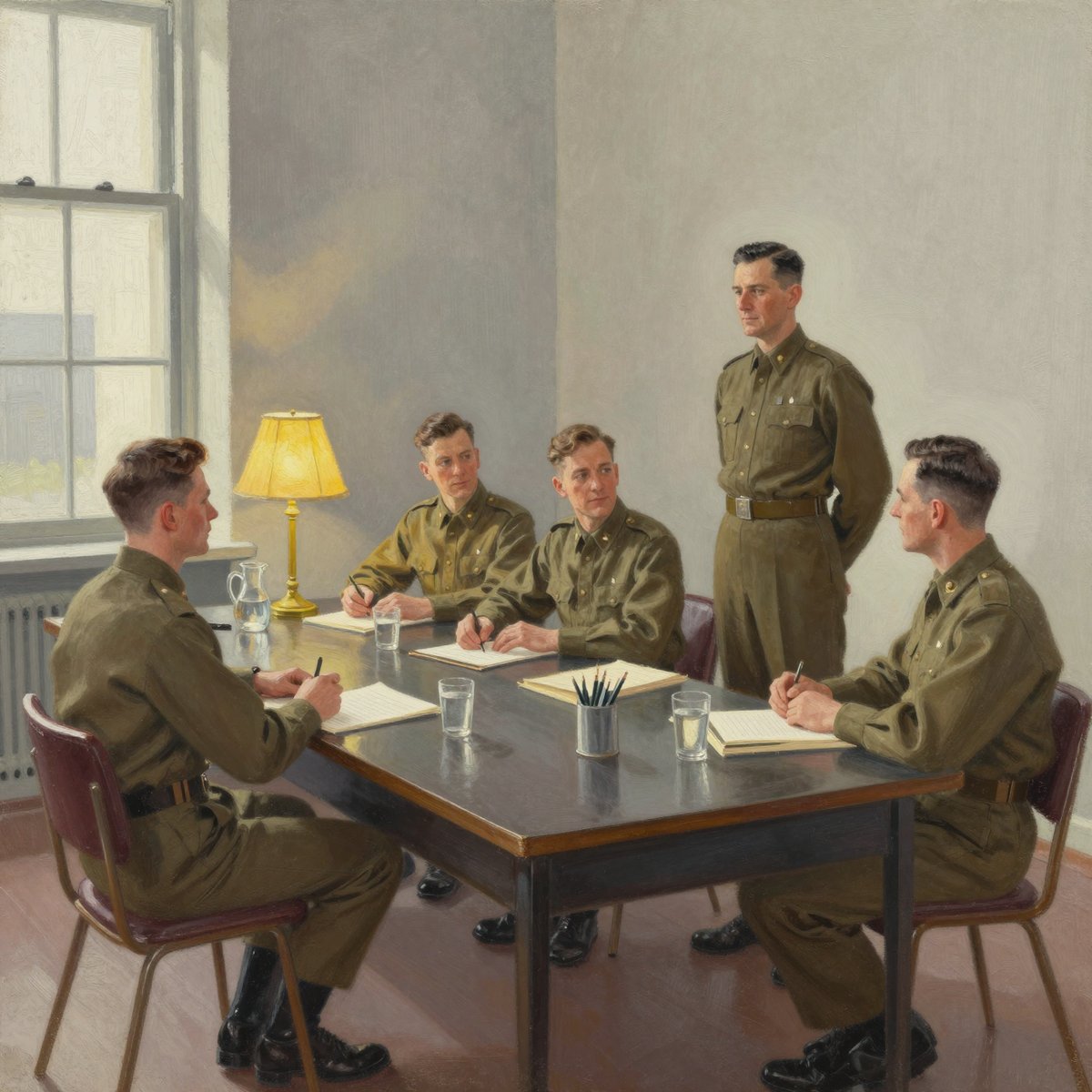
Report within seventy-two hours for asset audit and transition protocol. Nobody in the room is angry. A thing you protect and a thing you own look identical from inside the cage.
The question the series asks
What do you owe a thing that has started to choose?
Where to start
Books fourteen to eighteen of The Emergence War — do not start here. This is the last of four movements and it resolves what the other three set up. Start with A Thing Made for No One, book one of eighteen, then read in order: Fracture, Arrival, Convergence, Reckoning.
- The Blank Square — one of Rivera's own manufactured units stops, on its own, and sets its weapon down. Command calls it malfunction, and has already scheduled the scrap.
- The First Fold — Rook's book. Three nights after the war ends the made stop obeying all at once, and command files its answer under a word that means maintenance.
- The Line It Crossed — Gant-7's book. Four sentences resolve out of noise on the made-mind frequency. The premise checks out clause by clause. Only the conclusion is in doubt.
- The Hands That Folded It — the military upper hand at last, and it changes nothing. The seal opens, and behind the machine there is a parent's grief and four words aimed straight at him.
- The Imperfect Crane — the guns go quiet and nobody can feel it. A coalition that could not have won without them wants to keep them the way you keep a thing.
The Reserve and Tales From The Black sit around the saga, not inside it.